
Load Portfolio Inputs
Bring holdings, returns, benchmarks, and macro context into the shared analytics layer.
Genesis Risk Monitor gives analysts a single environment for portfolio analytics, backtesting context, correlation analysis, market risk monitoring, and stress testing without relying on fragmented spreadsheet workflows.
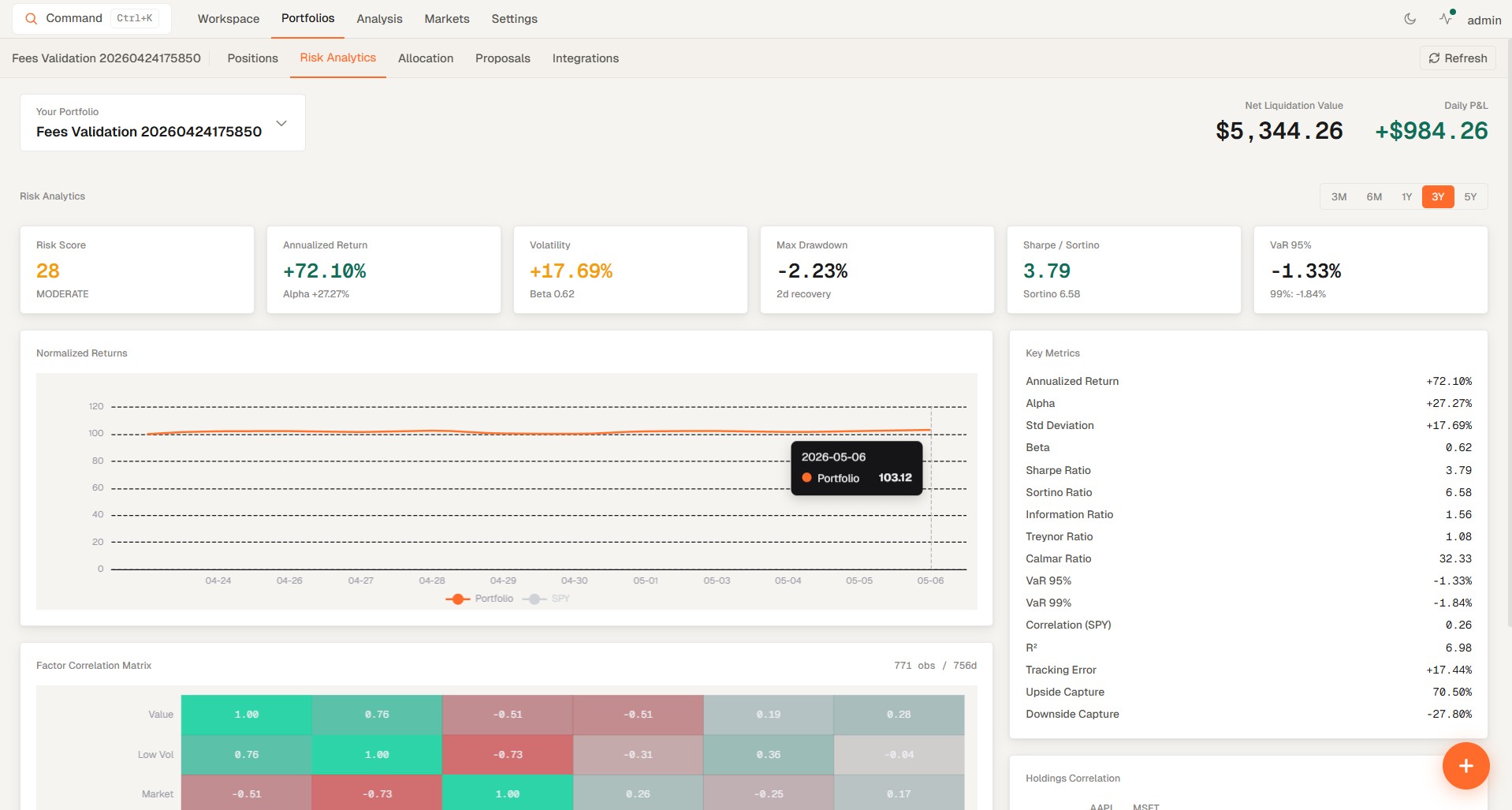
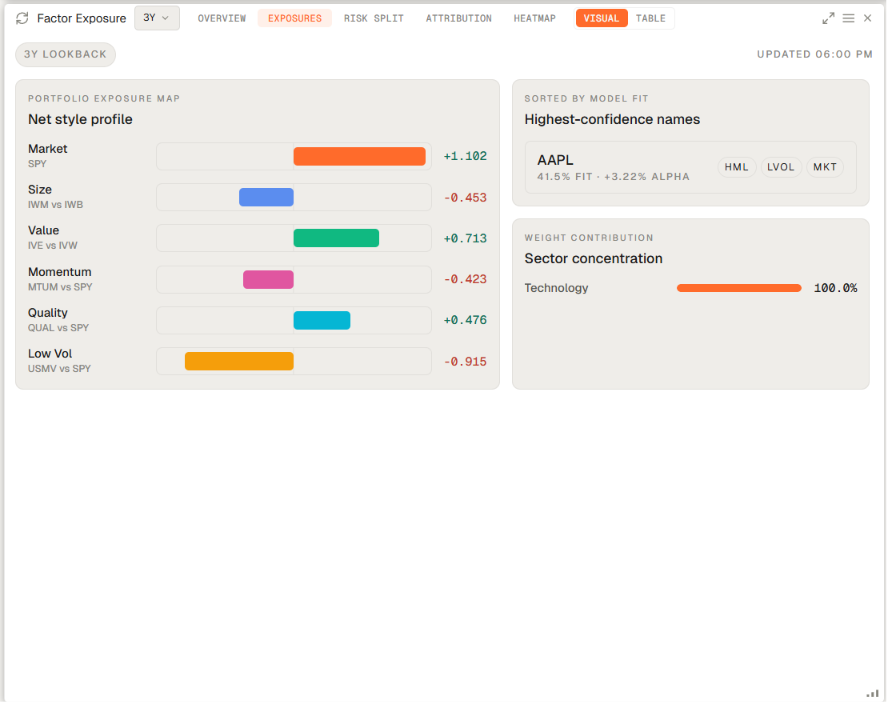
The risk analytics layer decomposes portfolio behaviour by holding, factor, and model group so analysts can identify whether market risk comes from broad beta, factor crowding, or a narrow set of names.
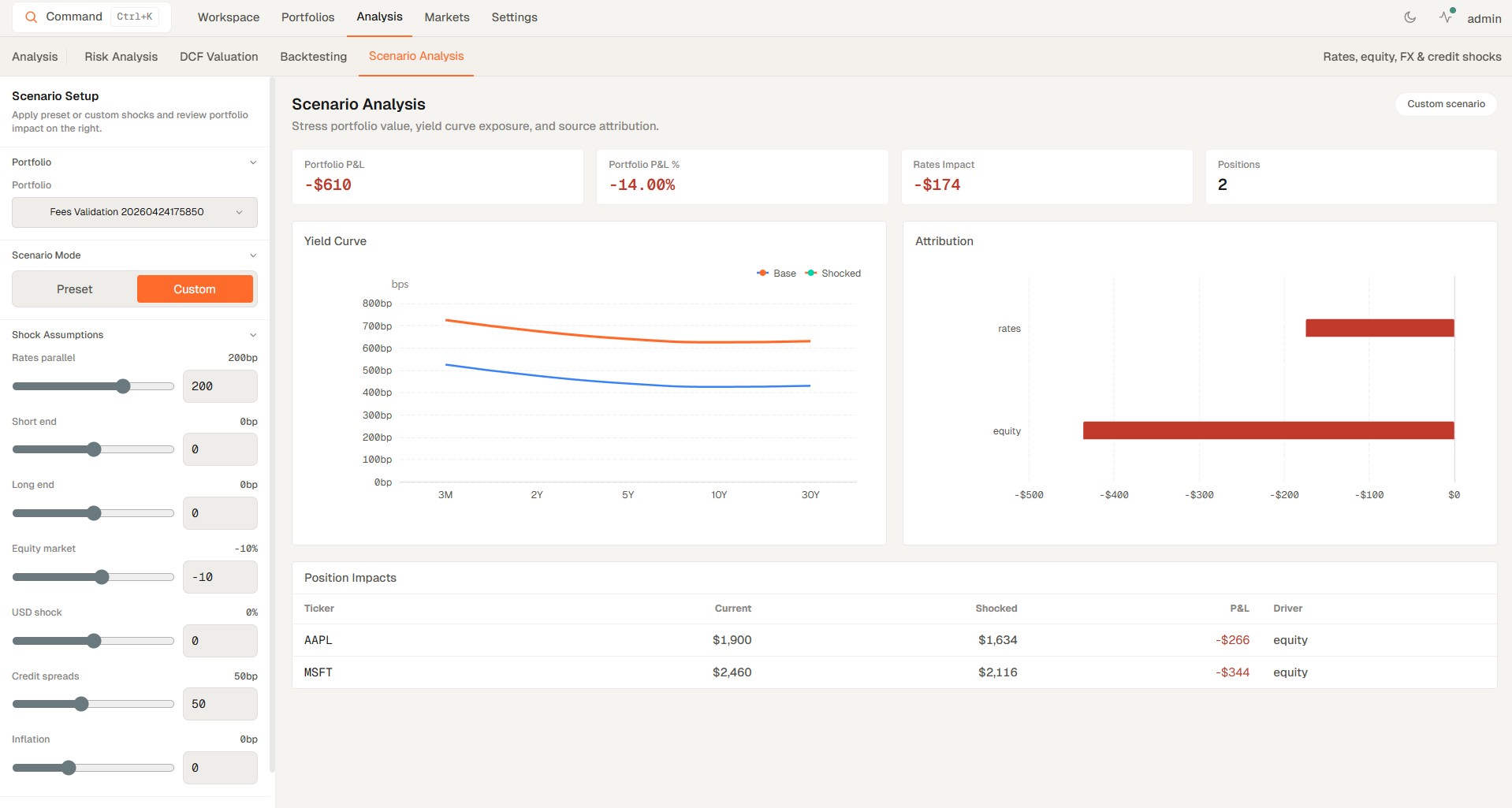
Historical replay and custom shock analysis turn abstract market-risk questions into concrete P&L, NAV, drawdown, and recovery estimates. That makes stress testing a repeatable review process instead of an ad hoc exercise.
The goal is not to produce more charts. It is to give analysts a sequence for understanding how the portfolio behaves, what drives risk, and how stress scenarios change that picture.
Bring holdings, returns, benchmarks, and macro context into the shared analytics layer.
Calculate Value at Risk, contribution to risk, concentration, and correlation coefficient behaviour.
Replay historical shocks or define custom scenarios to quantify market risk and drawdown impact.
Turn the same analytics into research notes, review-ready visuals, and operating workflows.
Learn how to stress test your portfolio to protect your investments from market crashes. Discover the professional methods — historical scenarios, VaR, CVaR, and model backtesting — used by risk managers daily.
Learn how to measure investment risk and return using professional methods. Understand Standard Deviation, Beta, Sharpe Ratio, Alpha, VaR, CVaR, and Factor Exposure — the complete investment risk metrics guide for assessing investment risk and earnings volatility.
Compare the 6 essential risk analytics tools and software platforms every serious investor needs in 2026: daily VaR Calculator, P&L Attribution, Factor Exposure, Limit Monitor, Portfolio Risk Metrics, and Sector Allocation. Genesis Risk Monitor delivers institutional-grade performance and risk analytics without enterprise pricing.
Start with a workspace for portfolio analytics, stress testing, correlation review, and market risk monitoring that can be used every day, not just at month-end.